


















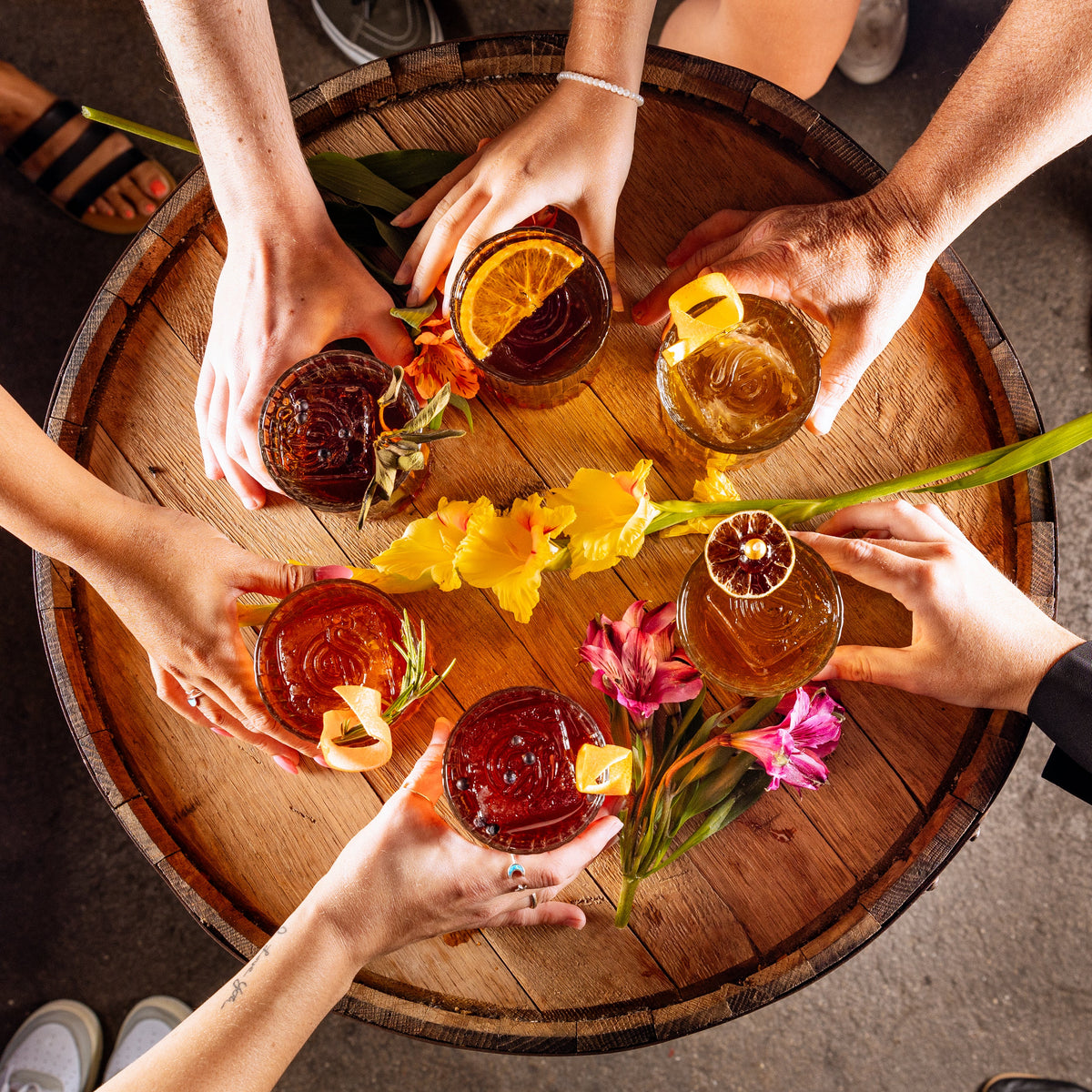
The Negroni is a classic cocktail believed to have originated in Florence, Italy, around 1919. While there is no definitive historical record proving exactly how the cocktail was created, the story most commonly told is that Count Camillo Negroni asked a bartender to strengthen his Americano by replacing the soda water with gin.
The Americano is a classic Italian aperitivo made with equal parts of Campari and sweet vermouth, topped with soda water. By swapping the soda for gin, the Americano became something entirely different: a cocktail made with equal parts gin, Campari, and sweet vermouth. Just from that simple substitution, the Negroni we know today was born.
Before we dive too deep into the Negroni, it helps to understand the culture it came from.
In Italian, aperitivo refers to the ritual of enjoying a drink and often small bites before a meal. The word originates from the latin word aperire, which translates to “to open.” The purpose of an aperitivo is to prepare the appetite for the meal ahead.
If you think about the Italian dinner culture, slowing down, savoring food, and spending time around the table, the idea of aperitivo makes perfect sense. You sit down, enjoy a pre-dinner cocktail, enjoy a few small plates, and ease yourself into the dinner experience while engaging in conversation. Meals are a time for connection in Italian culture. There’s no need to rush. In fact, it’s not unusual to spend hours at a restaurant, lingering long after the meal is finished.

That idea feels somewhat different from American dining culture. How many times have you finished eating and immediately started thinking about getting the check, clearing the table, and heading out? We’re often taught to be efficient, even when we’re supposed to be enjoying ourselves.
Aperitivo encourages the opposite. Slow down. Stay a while. Enjoy the drink in front of you and the people you’re sharing it with. I went to dinner with a friend a couple years ago, and when we finished our meal and left, I remember saying to them, “wow, we were only in there for 45 minutes!” They responded, “good, if you stay anywhere longer than an hour, you’re overstaying your welcome.” I remember understanding the thought process, but also thinking about how different that mindset is from the way we could be experiencing hospitality.
Let’s take a page from Italy’s dining culture and step outside of our usual routine. Invite a friend or family member out to dinner or drinks at your favorite restaurant, cafe, or even the End of Days lounge and really settle in. Hospitality venues are there for you. Sit down, order a few cocktails, maybe some snacks or a charcuterie board and really enjoy the company of your loved ones.
Campari, Aperol, vermouth, and prosecco are all common parts of Italian aperitivo culture, and the Negroni has become an iconic part of this tradition.
One of the most well-known Negroni variations is the Negroni Sbagliato. The name Sbagliato means “mistaken” or “wrong,” referring to the story that a bartender accidentally reached for sparkling wine instead of gin when making a Negroni.

The result is similar to the Americano: equal parts Campari and sweet vermouth, but finished with sparkling wine instead of gin or soda water. It’s lighter, bubbly, and refreshing, while still carrying the bitter-sweet character of the original.
This brings us to something I find particularly interesting about cocktails. Most new cocktails aren’t created completely from scratch. They usually fit into an existing structure or family.
And that’s what makes cocktail creation so exciting.
Once you understand the structure, you can start changing the individual components while still maintaining balance. You can change the spirit. Change the fortified wine. Change the bitter element. Add citrus, coffee, herbs, spices, or fruit. Suddenly, you have something new, but you can still recognize where it came from and the history behind it.
The tricky part of creating a riff on a classic is finding that balance between familiarity and originality. A cocktail should have enough variation to feel new and exciting without straying so far from the original that it loses its identity.
A Negroni gives us an especially simple framework to work with:
Spirit. Sweet. Bitter.
Gin provides the spirit. Sweet vermouth provides sweetness and fortified-wine character. Campari provides bitterness and depth.
Another well-known variation of the Negroni doesn’t stray too far from the classic: the Boulevardier. It keeps the Campari and sweet vermouth, but swaps the gin for bourbon, creating a richer, warmer version of the original.
This idea of taking something classic and continuing to reinterpret it is part of what makes Negroni Week so much fun.
Negroni Week was launched in 2013 as a charitable initiative celebrating one of the world’s most iconic cocktails while raising money for charitable causes. Bars and restaurants around the world participate by serving classic Negronis and creative variations, with proceeds benefiting participating charities.
End of Days has participated in Negroni Week for the past few years, serving new and exciting takes on the classic Negroni while continuing to explore what makes the original so timeless.
Negroni Week 2026 will run from September 21-27.
Below, I’ve shared a few timeless Negroni variations, along with one of my own creations, Bitter & Brewed. A coffee-infused riff that plays with the bitter, botanical character of the original.
Come join us in the lounge and explore the Negroni with us. Make sure you slow down and stay a while!
Recipes
Negroni
Ingredients
- 1oz Port of Entry Gin
- 1oz Campari
- 1oz Sweet Vermouth
- Expressed orange peel garnish
Directions
- Add all ingredients into a mixing glass without ice.
- Add ice to the mixing glass so that there's more ice than liquid.
- Use a mixing spoon to carefully stir the cocktail for about 30 seconds.
- Add a square or sphere ice cube to your rocks glass and use a hawthorne strainer to pour your stirred cocktail into the glass.
- Peel an orange once and hold the orange peel with the skin side facing the drink, then pinch it to release the essential oils over the top of the cocktail. Rub the peel along the rim of the glass before dropping it in.
Negroni Sbagliato
Ingredients
- 1oz Campari
- 1oz Sweet Vermouth
- Splash of prosecco
- Optional: 1oz Port of Entry Gin
- Expressed orange peel garnish
Directions
- Add all ingredients, minus the sparkling wine, into a mixing glass without ice.
- Add ice to the mixing glass so that there's more ice than liquid.
- Use a mixing spoon to carefully stir the cocktail for about 30 seconds.
- Add a square or sphere ice cube to your rocks glass and use a hawthorne strainer to pour your stirred cocktail into the glass.
- Top your cocktail with a splash of sparkling wine.
- Peel an orange once and hold the orange peel with the skin side facing the drink, then pinch it to release the essential oils over the top of the cocktail. Rub the peel along the rim of the glass before dropping it in
Boulevardier
Ingredients
- 1oz Survivors Cut Bourbon Whiskey
- 1oz Campari
- 1oz Sweet Vermouth
- Expressed orange peel garnish
Directions
- Add all ingredients into a mixing glass without ice.
- Add ice to the mixing glass so that there's more ice than liquid.
- Use a mixing spoon to carefully stir the cocktail for about 30 seconds.
- Add a square or sphere ice cube to your rocks glass and use a hawthorne strainer to pour your stirred cocktail into the glass.
- Peel an orange once and hold the orange peel with the skin side facing the drink, then pinch it to release the essential oils over the top of the cocktail. Rub the peel along the rim of the glass before dropping it in